
Moving from magnetron to solid-state microwave power
Lessons from engineering a solid-state alternative for industrial heating and plasma equipment.
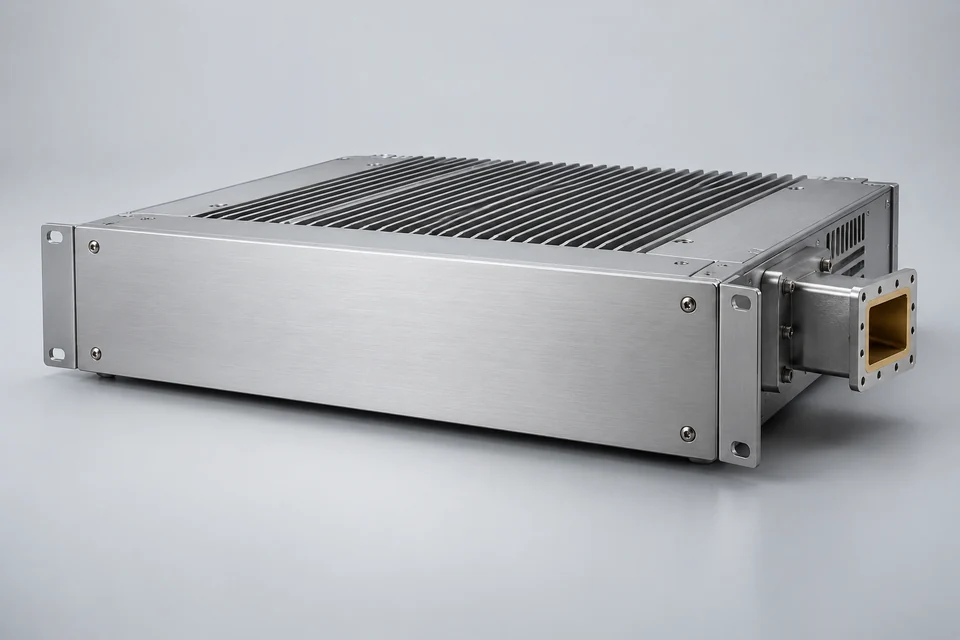
The challenge
Replacing a magnetron source meant defining more than frequency and nominal power. The work had to connect the process load, duty cycle, available controls and existing power-delivery path with a suitable solid-state architecture.
What the work established
Our assessment compared an integrated generator with a combined-amplifier approach. It brought frequency, power and phase control together with combining losses, cooling, reflected-power protection and interlocks, making the integration responsibilities and supplier interfaces explicit.
Further reading
RFHIC: solid-state RF energy for industrial applications
RFHIC generator datasheet: an example of operating limits and interfaces
Solid-state microwave power, from source to load
Explore reflection, combining and thermal load in a 2.45 GHz source. This complements our PECVD and magnetron transition engineering work.
What does your application need?
Bring the operating requirement, interfaces and constraints.